The Toyota Brothers: How Toyota Saturated the Automotive Market in the Early 2000's
One of the beauties of the Nigerian car scene is that almost any automobile can come in through our ports. By this, I mean that European, American, and even Chinese spec cars can all be imported into the country. Unlike countries across the Pacific, where there are strict regulations on what can be imported, Nigerians have a lot more freedom. The Americans, for example, have to wait 25 years before they can legally import some of their favourite JDM legends. But here in Nigeria, if you have the money, you can probably ship it in. This is exactly why our car scene is so diverse and beautiful, which brings me to today's car highlight.
 |
| Source: Toyota UK Magazine |
Some know it as the Altis, others know it as the Vios, and here in Nigeria, we mostly know it as the Yaris. It's a pretty common car in present-day Nigeria, largely because of its practicality and fuel efficiency, especially with the ever-rising fuel prices. I have personally driven one, and for such a tiny car, it sure packs a punch without leaving an agape hole in your pocket.
A Curious Discovery
I first came across the Toyota Yaris back in secondary school, sometime around 2014. One of my teachers owned a black second-generation Yaris sedan. It was my first time seeing one and, in my inquisitive nature for anything on wheels, I rushed over to take a peek. It had a small, bubbly, rounded exterior that seemed rather playful. The perfect word would be 'cute', a car that matched the personality of a working-class lady, just like my teacher.
 |
The Second-Generation Yaris My Teacher Had; Source: Nairaland |
The car was tinted, so I pressed my face against the glass to take a look at the interior, and something immediately caught my attention. For some weird reason, the instrument cluster was situated in the middle of the dashboard. I thought to myself, 'Were the engineers drunk or something?'
I had previously seen this same layout in the first-generation Nissan X-Trail. In the X-Trail, the instrument cluster sat right in the middle of the dashboard, and I thought it looked awful and even a little unsafe because the driver had to take their eyes completely off the car's path just to check the gauges. As for the Yaris, the dashboard was slightly tilted towards the driver, so I guess it was a bit more manageable.
 |
| Interior of the Yaris with its iconic centre-mounted instrument cluster; Source: Toyota.co.uk |
The Doppelgängers
Fast forward a few years, and my dad bought a first-generation Toyota Vios. It was my first time seeing one, and on closer inspection, it had the same centre-mounted instrument cluster as the Yaris and they practically looked identical. So, naturally, I did my research and voilà! It turned out to be the Yaris' brother. I specifically said 'brother' and not 'cousin', because that would be too distant. And guess what? They had even more brothers. Let's dive right into the family tree.
 |
| First-Generation Toyota Vios; Source: Reddit |
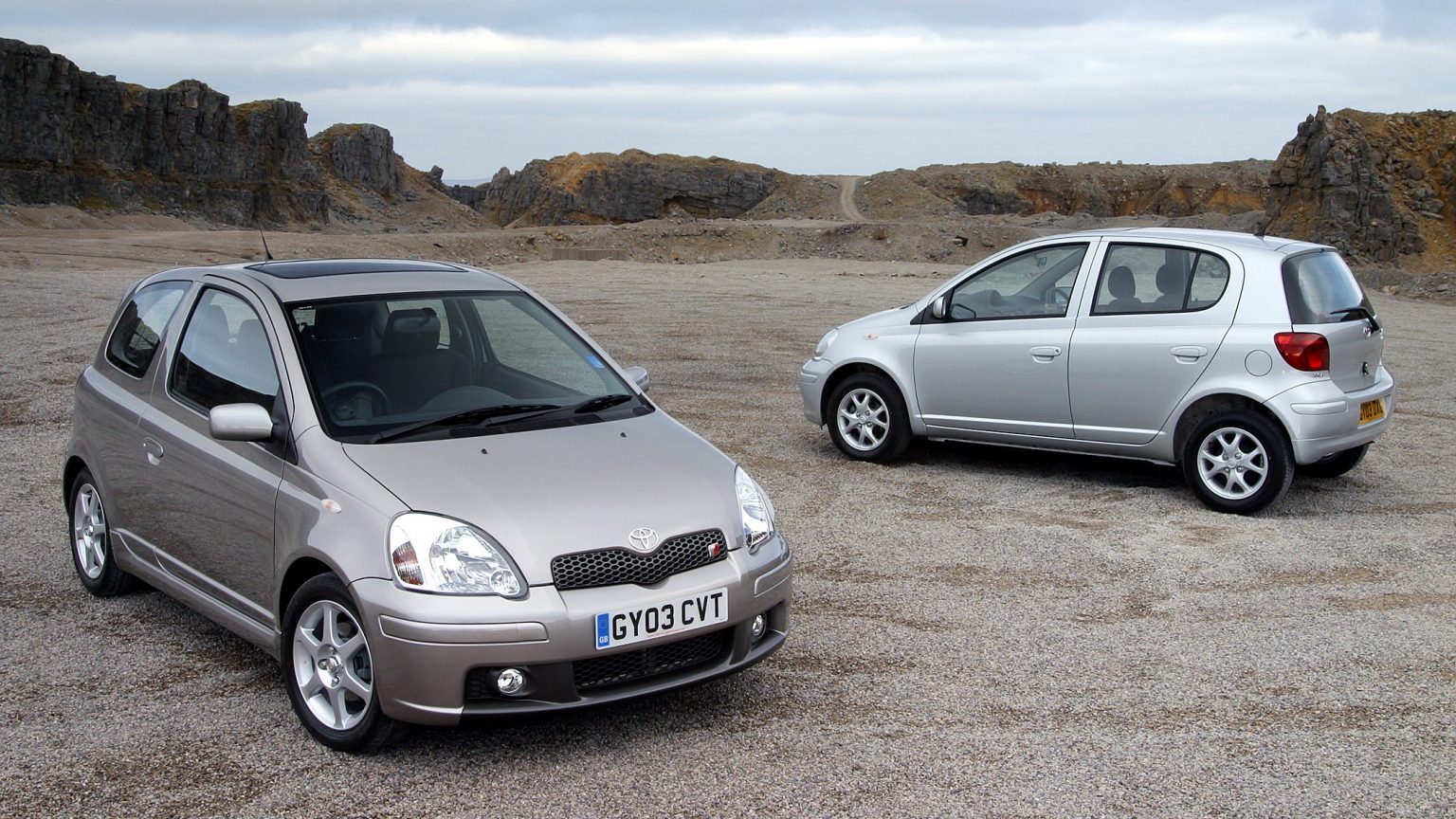
The Toyota Yaris was launched in 1999 as a replacement for the Toyota Starlet and was nicknamed 'The Little Genius'. Ironically, the Starlet itself made a comeback in 2020 and is currently on sale in some markets, but that's a story for another blog post. Back in January 1999, the car was first introduced to the Japanese market as the Toyota Vitz.
Family Ties - In Kendrick Lamar's Lyrics
As Toyota expanded globally, it wore different names depending on where it was sold. It became the Toyota Yaris in Europe in April 1999 and the Toyota Echo in Australia in October 1999. As for North America, they didn't get the Yaris until its 2007 model year and it retained the Yaris name. Meanwhile, markets across Southeast Asia, China, and Taiwan received it as the Toyota Vios from 2002 onwards. Interestingly, 'Vios' is derived from the Latin word 'vio', meaning 'to go' or 'travel forward' and travelling is exactly what my father bought it for.
 |
| First-Generation Toyota Yaris Hatchback; Source: Toyota.co.uk |
If you've been paying attention, then riddle me this: how many brothers do we have now? Well, we're at four, Vitz, Yaris, Echo, and Vios. But hold on, we're still not done. When the second-generation Vios arrived in 2007, it was marketed as the Toyota Belta in Japan, while still carrying the Yaris badge in certain markets like the Middle East, Australia, and parts of North America.
Then, in 2017, Toyota introduced a facelifted version known as the Toyota Ativ in some Southeast Asian markets. Indonesia also received a taxi-spec variant called the Toyota Limo. If you're keeping count, that's three more brothers, bringing the family to a total of seven.
.jpg)
Why so many Brothers?
This isn't officially confirmed, but my personal theory is that Toyota created these seven variations as a clever way to saturate the global automotive market. Over the years, Toyota has become a master of something called market segmentation. Simply put, market segmentation is the process of dividing a large group of potential buyers into smaller groups so products can be marketed more effectively. The four main types are demographic, geographic, psychographic, and behavioural segmentation. In this case, I believe Toyota took advantage of geographic segmentation by giving essentially the same car different names in different parts of the world.
By doing so, Toyota could make subtle changes to the Yaris platform to better suit local tastes, regulations, and market demands while still building on the same proven formula. It also meant that if one version struggled in a particular market, it wouldn't necessarily affect the reputation of its siblings elsewhere because, to many buyers, they were entirely different cars.
 |
| Source: Startup Talky |
Now, whether this was Toyota's actual intention, I can't say for certain. It's simply my interpretation after looking at the Yaris family tree. That said, if anyone from Toyota happens to stumble across this article and is willing to confirm or completely debunk my theory, my inbox is always open.
Award-Winning Underdog
The Yaris was built with one goal in mind: to be compact, affordable, and economical, and it has excelled at all three. Those qualities earned it the prestigious European Car of the Year award back in the year 2000, a title it remarkably won again in 2021. Over the years, the Yaris has been available in both 3- and 5-door hatchback configurations, as well as sedan variants. As for the powertrain, it was never really designed to set your heart racing. It simply got you from Point A to Point B reliably.
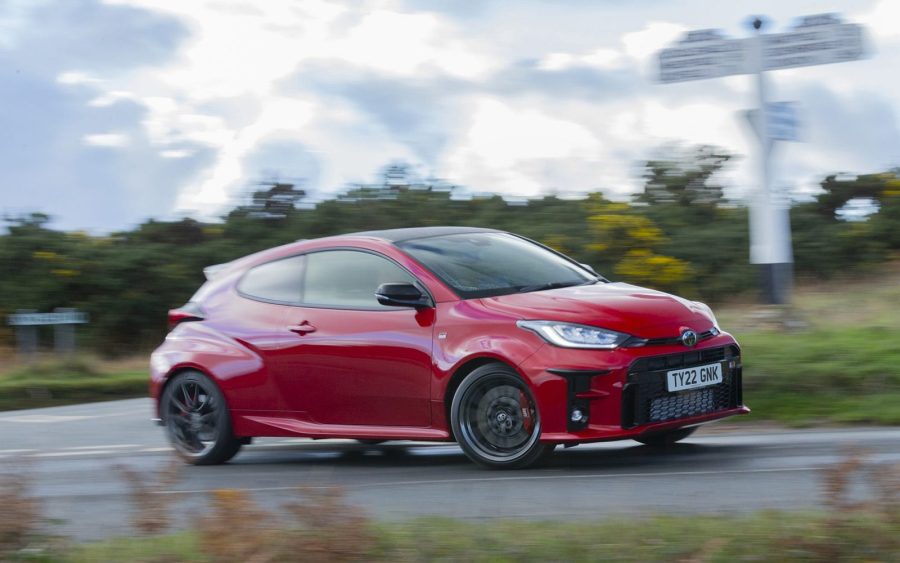
Well... that was until 2020. Toyota suddenly decided to give one of the brothers special treatment and introduced the Toyota GR Yaris. Powered by a 1.6-litre three-cylinder turbocharged engine paired with a 6-speed manual transmission. The GR Yaris transformed the humble little hatchback into a genuine performance machine. It was still a tiny engine, but Toyota worked some magic, proving that getting from Point A to Point B could actually be exciting.
 |
| Toyota GR Yaris; Source: Toyota.co.uk |
Overall, I have personally come across just three out of the seven brothers in the Yaris family tree on Nigerian roads. But I am pretty sure the remaining four are lurking around somewhere in the country, waiting to be discovered. That brings us to the end of this blog post and now you know about the Toyota Brothers. So the next time you spot one of them on the road, tell it to say hi to its other brothers on your behalf.
Turbo Trivia
Despite sharing the same roots, the Yaris family has worn at least seven different names around the world and I use the acronym 'BELAVY' to remember them. So using the acronym, what are the names of the seven Toyota Brothers? No cheating...
 |
| Turbo Trivia |
Finally, if you're in the market for a Toyota Yaris or just about any other vehicle/motorcycle, be sure to reach out to us at Raaxada Autopro NG or call 09124497967. Until next time, always remember to Turbo that engine!!!






Comments